We use functional cookies on this website, which are essential to the operation of this website and are always on. We also use non-essential cookies to improve your experience and analyze traffic. To learn more, please review our Privacy Policy.

Mapping Sexual Violence in New York City
In 2024, The Alliance completed a multi-year mapping project that pinpointed gaps in New York City’s sexual violence response system. Data analysis revealed what survivors and the organizations that serve them have experienced for years: the biggest gaps in services exist in communities experiencing the highest rates of sexual violence, oftentimes in outer boroughs and low-income communities of color.
Contents
Key Citywide Findings
Lack of SAFE-Certified Examiners
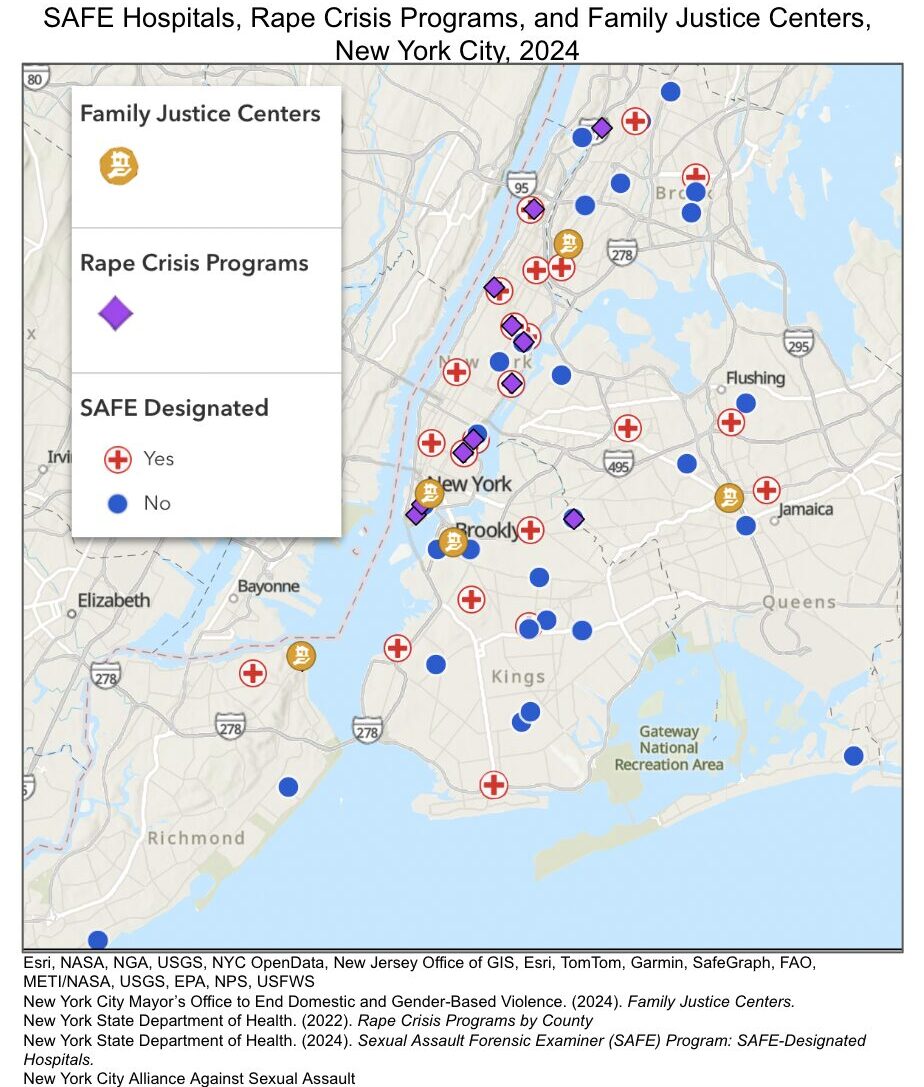
Despite the New York State Survivors Bill of Rights mandating all hospitals to provide access to sexual assault forensic care, many hospitals, particularly in low-income communities, lack access to trained medical staff also known as Sexual Assault Forensic Examiners (SAFEs). These SAFEs receive specialized training in providing medical care to survivors and in the collection of forensic evidence. Instead, survivors are often met with medical staff that lack the knowledge to provide critical after care services. High wait times for SAFE examiners at emergency departments often result in survivors waiting hours for care, compounding the trauma survivors experience. This is especially true for pediatric survivors who often experience the lowest access to SAFE services.
Insufficient Advocate Access
New York City is home to 12 rape crisis programs (RCPs), organizations who specialize in providing 24/7 support and aftercare services to sexual assault survivors. These services include, but aren’t limited to, advocates to accompany survivors to the emergency room for medical treatment, support in navigating the criminal legal system, and access to counseling, legal, and case management services. Despite the New York State Survivor Bill of Rights guaranteeing advocacy services, the lack of funding, combined with New York’s City’s unique RCP program structure, results in many survivors lacking access to advocate services. Of the hospitals we surveyed, only three noted having enough advocates on call to meet survivor need.
Underfunded Rape Crisis Programs (RCPs) and Community-Based Victim Service Providers
Existing RCPs struggle with inadequate resources, limiting their ability to provide crucial services like legal advocacy, emergency housing assistance, case management, and mental health support. Many of these gaps in service delivery are being filled by community-based victim service providers, many of which identify as culturally responsive or population specific. There is a growing frustration with the lack of support and funding for these services, despite the key role they are playing in the service delivery ecosystem.
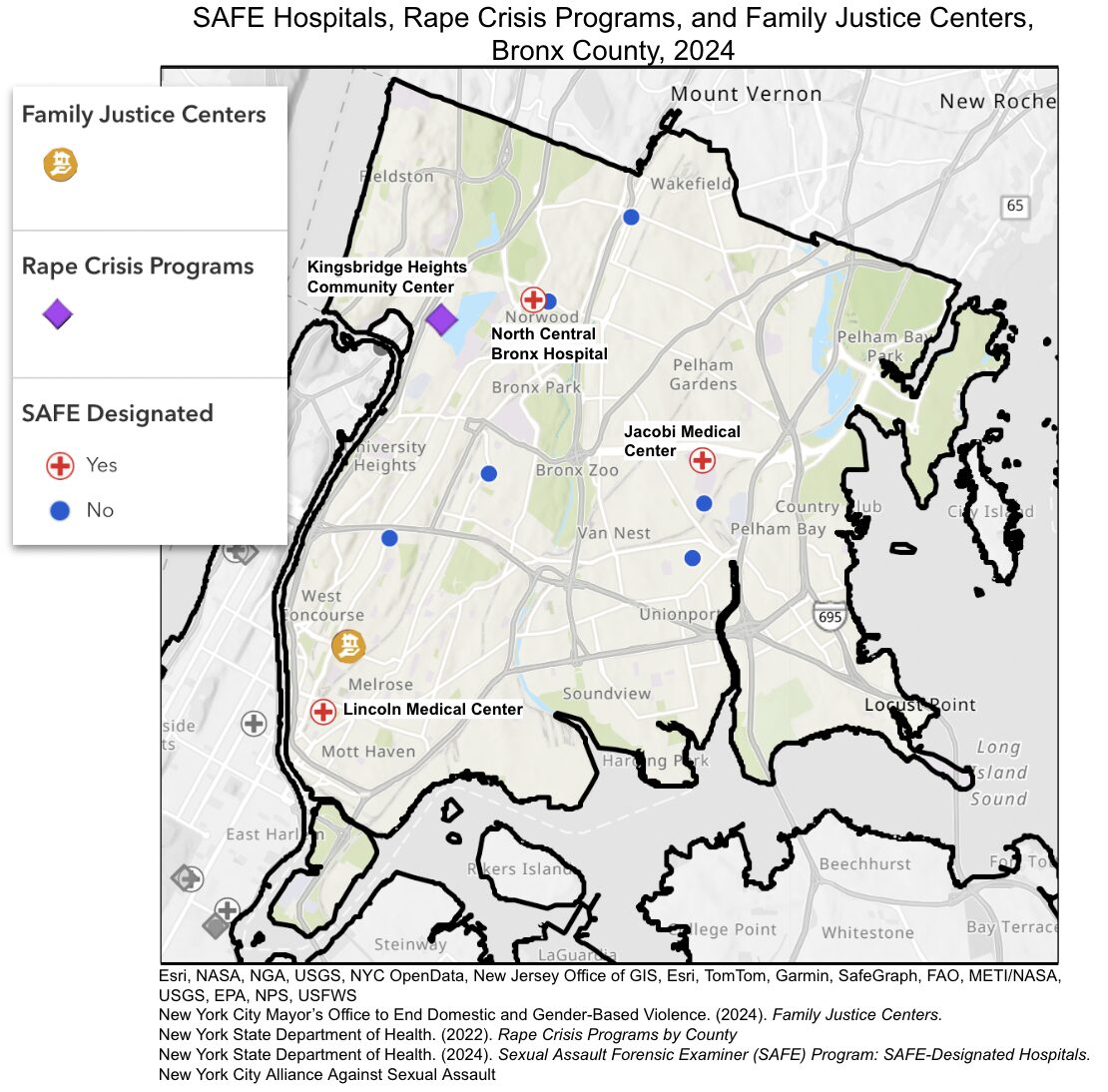
Bronx
The Bronx has only one RCP and just 11 advocates to serve the entire borough.
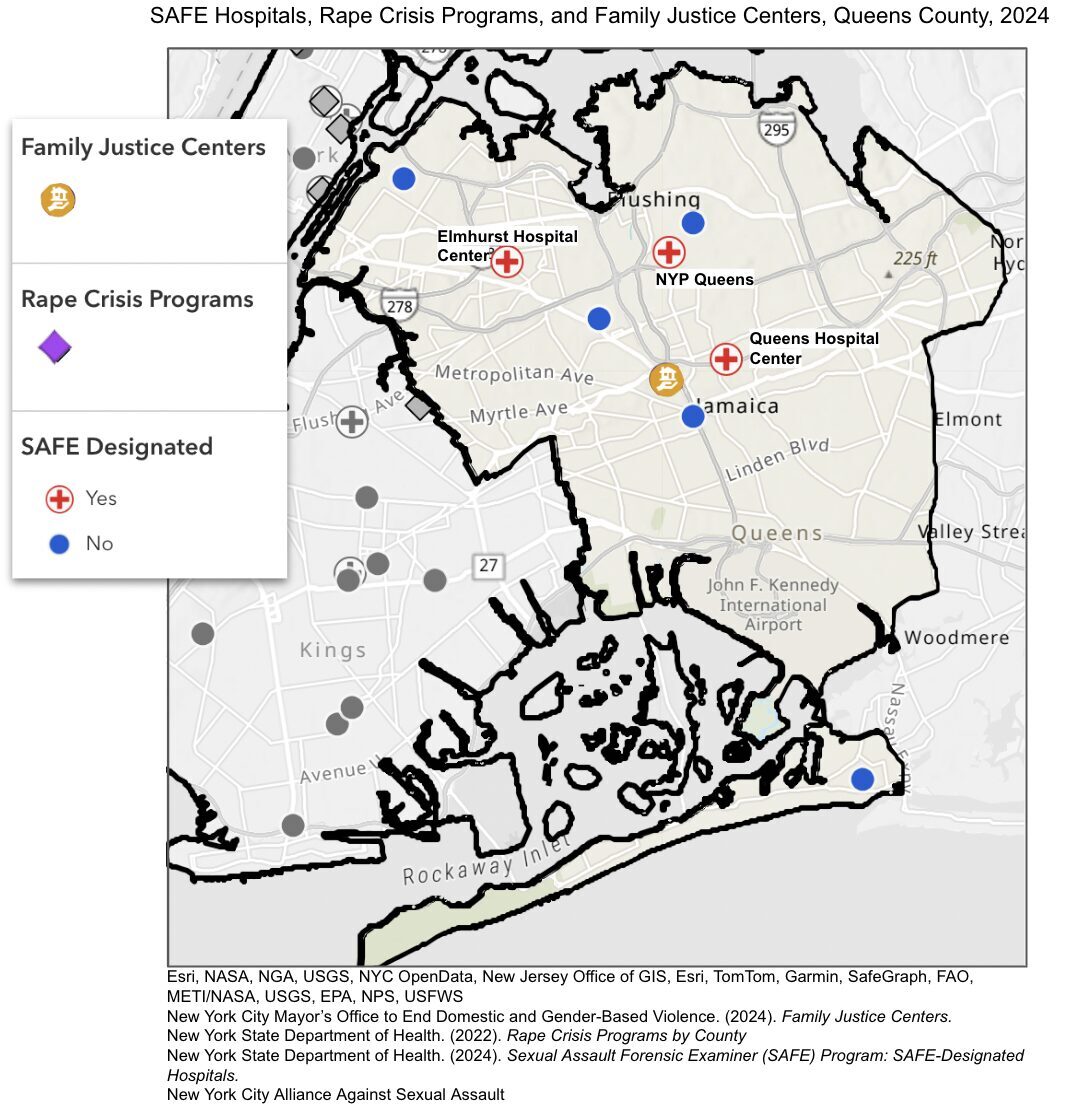
Queens
Queens had only two SAFE-certified hospitals until 2024, leaving many survivors without specialized care.
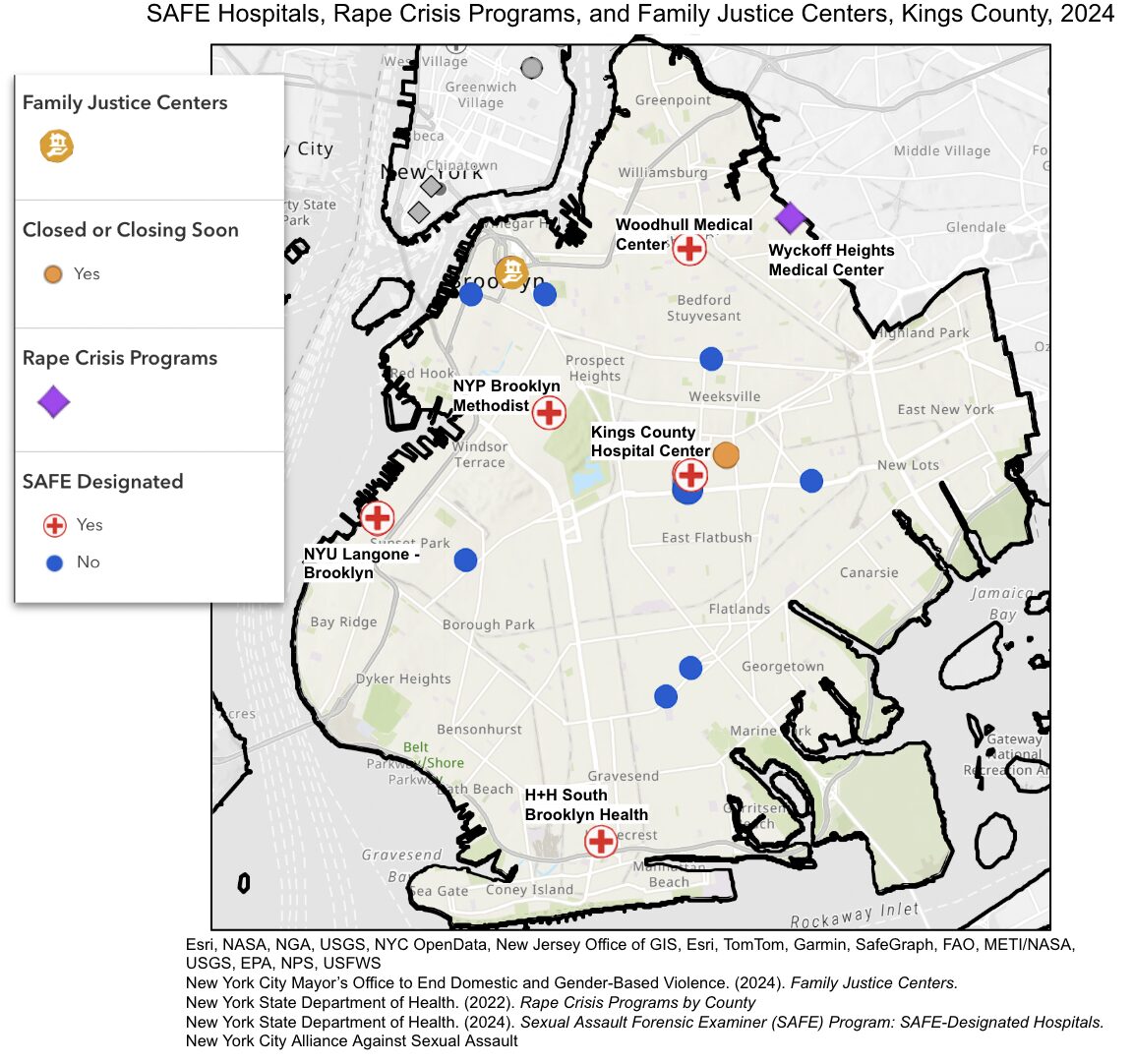
Brooklyn
Brooklyn is losing emergency departments, further straining resources.
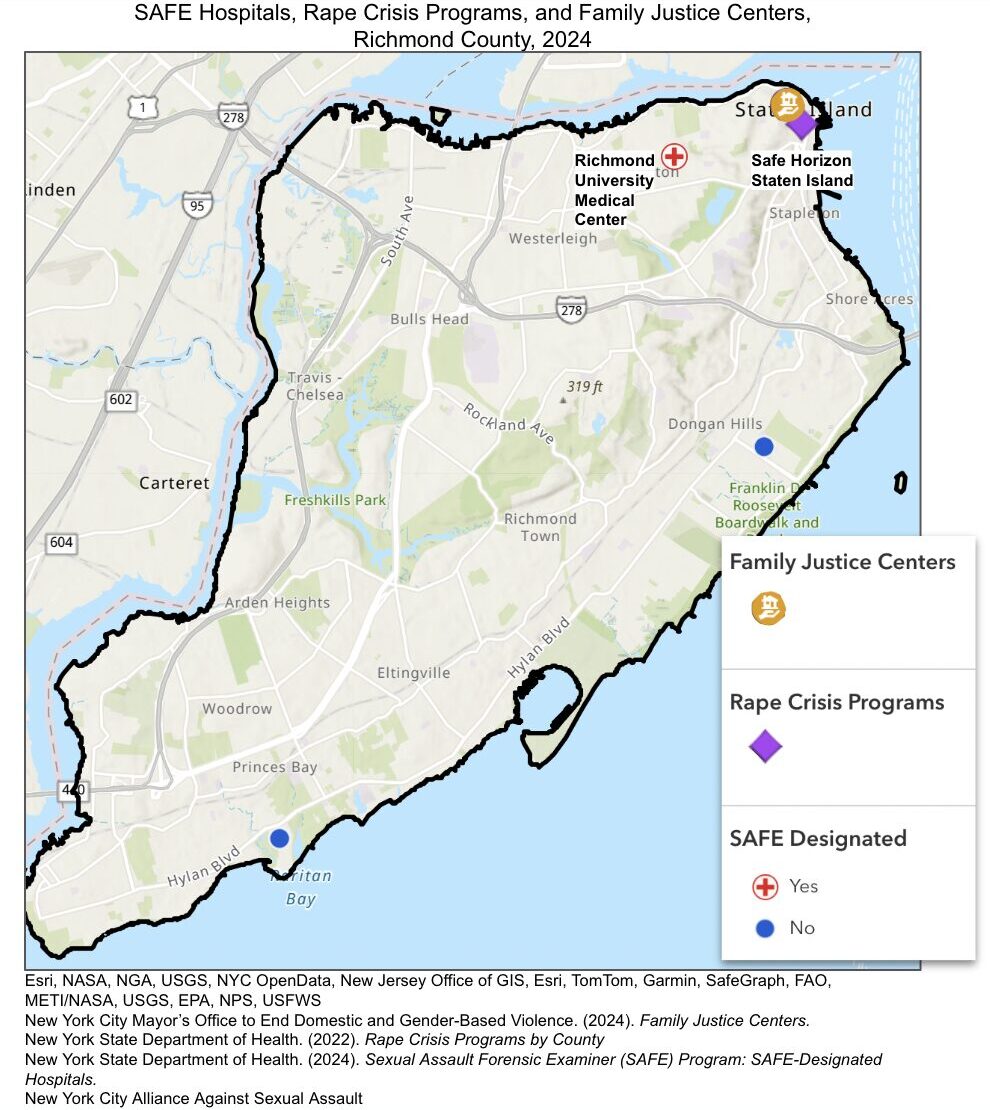
Staten Island
Staten Island has no active in-person advocate response at any hospital.
Manhattan
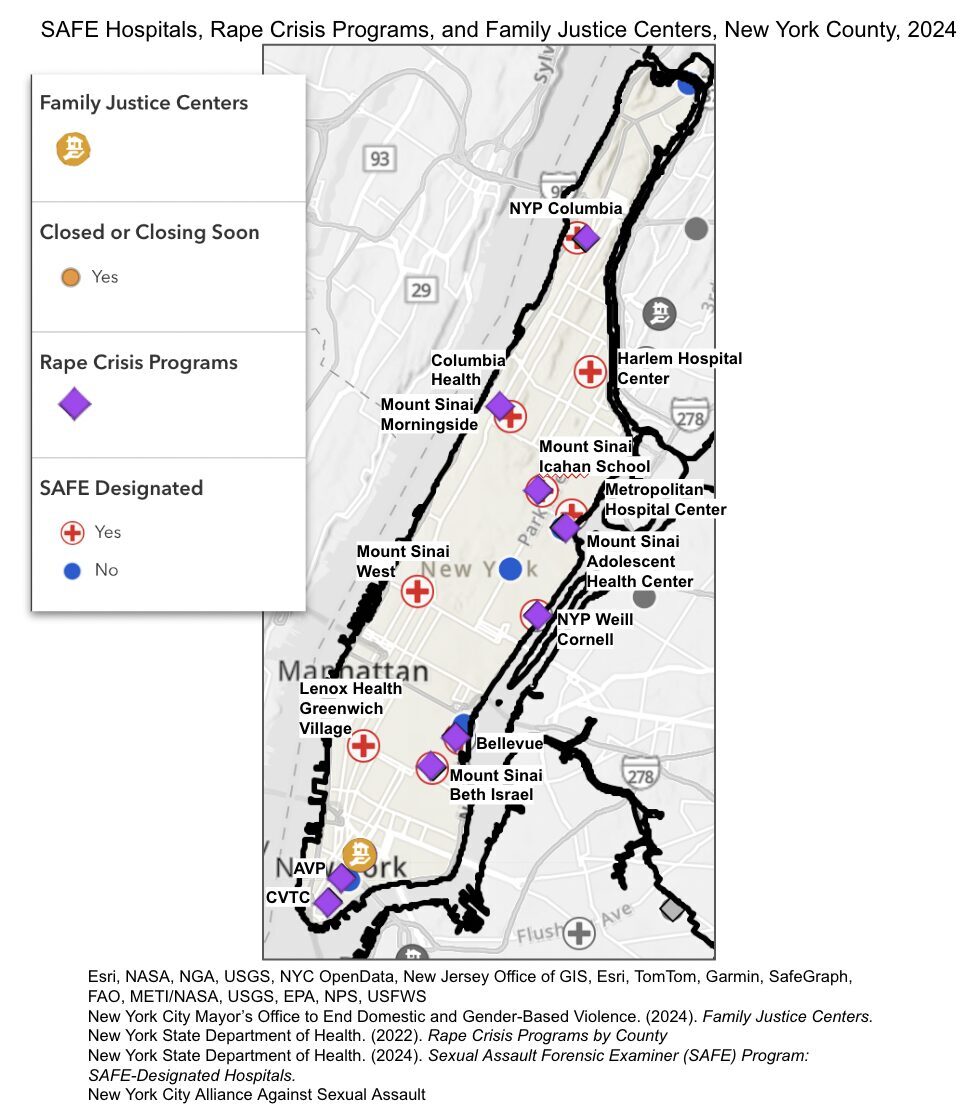
Manhattan has the most services but still struggles with advocate shortages and disparities in care quality.
What’s Next
Identifying these gaps is only the start. The Alliance has been and will continue to use this data to advocate for the changes survivor-serving organizations tell us are needed.
Questions? Email contact-us@svfreenyc.org